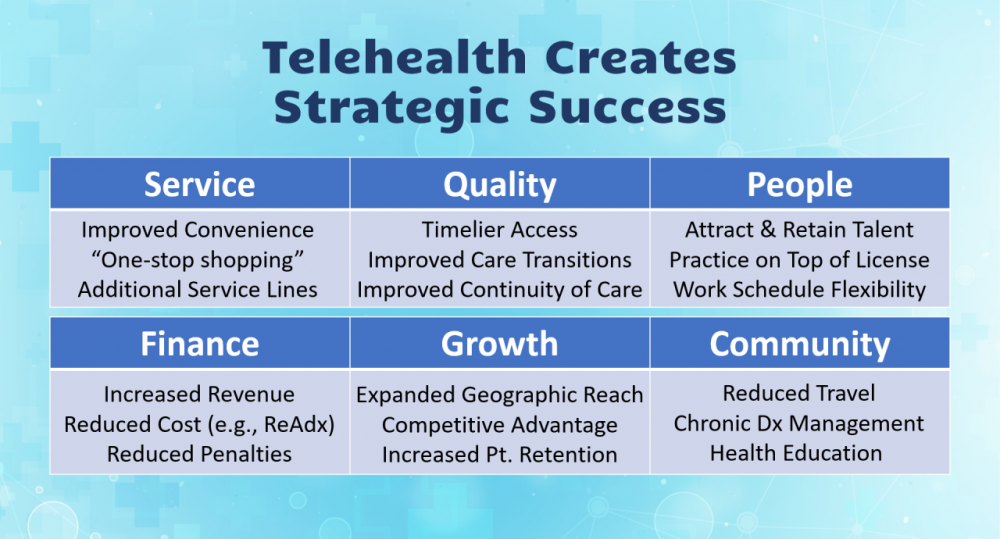
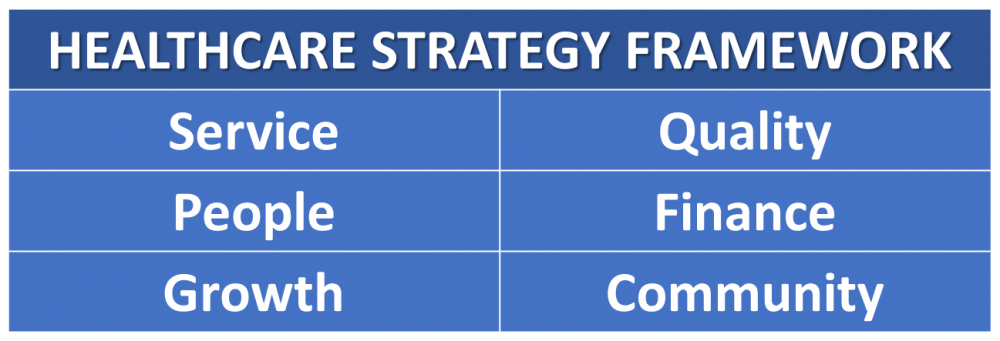
What’s interesting to realize is how much telehealth and telemedicine services can help organizations move the needle into the right direction across all of those six areas.
Better service, better patient retention
As illustrated by Dr. Halamka’s quote, the demand for telehealth and digital health services is only going to increase, it will not go back to pre-Covid-19 volumes.
And why should it? At least two-thirds of outpatient visits, if not more, do not require a hands on examination, at least not by the physician. A 12-minute visit with a physician typically takes patients at least 6 times as much time to make it to the appointment, check in, wait and then the whole thing in reverse. A visit “from the comfort of your home” cuts out as much as 80% of that predominantly unproductive time.
Just recently my annual visit with my primary care provider, via telemedicine, took me 37 minutes (including 12 minutes of wait time that I used productively on email). I talked to his nurse and the scheduler on the phone and to the physician via video, successfully covering the five topics I had wanted to address.
In another example a colleague of mine had a 3-month frozen shoulder injury follow up appointment via telemedicine that took a mere 3 minutes and maybe, if even, 10 minutes of her time.
With experiences like these, why would anyone want to go back to in-person care for every visit? Our lives are so busy, even during Covid-19, that we often put off medical care until it becomes urgent. While going to the doctor in some cases is never “fun”, the additional dread of the logistics surrounding a traditional visit causes many people to delay care.
Through Telehealth many smaller healthcare organizations can also facilitate access to specialty services, providing patients with a “one-stop shopping’ experience. In addition, telehealth opens the door for additional, virtual service lines, e.g., genetic counseling or specialized physical therapy.
More Engagement, better Outcomes
When care is quickly accessible, when it is convenient, numerous studies have shown a significant reduction in high cost utilization (such as ED or hospital admissions), and with that the quality of care improves measurably.
Many health outcomes are influenced by the degree to which a patient is engaged in their care. Easy, direct access to the physician and staff via a highly relatable communication mechanism such as video chat has also shown to increase patients’ participation in their care plan.
Telehealth not only offers opportunities for timelier access to care (before exacerbation), but also allows for better care transitions and with geographic distance no longer being a barrier, providing opportunities for improving the continuity of care.
Finances and Growth
On the revenue and profit side, with reimbursements for telehealth being for the most part on par with in-person care, a number of telehealth services can lead to an increase in revenue. This could be through new service lines provided by a remotely-located specialist or through arrangements with other regional networks.
When quality metrics are tied to rewards and penalties (such as for 30-day readmission), small, targeted investments into telemedicine can achieve significant savings.
Furthermore, when the majority of outpatient visits can be conducted at a distance, the definition of a geographic area that a healthcare organization can serve can be significantly expanded. And with growing competition (even from the patients insurers offering telemedicine services to their members) investing in telehealth is a good strategy to avoid revenue erosion.
Finally, with the cost of new patient acquisition typically being high, especially in markets where patients have choices, offering a convenient, modern way to receive the care when they need it where they want it can go a long way towards patient loyalty and retention.
People and Community
But telehealth does not only have a positive impact on patients or on the bottom line. The people side of an organizations’ strategy can benefit just as well from telehealth. Many providers and staff have realized for a few years now that experience and good skills in all things digital health are critical for their future care.
As many have discovered across all industries, distance work also allows for a much greater flexibility, further increasing job satisfaction when trying to align work and family schedules. Investing in Telehealth thus can help to attract and retain talent.
The launch of a new telehealth services also presents a unique opportunity to define how healthcare could be delivered most optimally, so that everyone can practice “on top of their license”. That redefinition alone can significantly increase physician and staff satisfaction which in turn leads to better patient outcomes.
Last but certainly not least, telehealth services empower any healthcare provider to truly be a supporter of the surrounding communities, especially those with severely limited access to care or transportation (often both). The internet offers opportunities for health education and innovations. And advances in monitoring technology now allow for an easy-to-deploy solution to support people with chronic diseases, even in the absence of a local clinic or home nursing services.
To Sustainability and Beyond
Telehealth is not merely a video chat software to give to physicians and say “here, talk to your patients, it’s safer”. Telehealth has long been regarded by many experts primarily as a clinical tool - a means to deliver care to patients where they want and need it.
Telehealth, when applied correctly, is a strong tool in the tool chest of healthcare organizations’ leadership. It’s a tool that leadership can use to move the needles of organizational strategy into the right direction across all strategic objectives.